In climate and sustainability circles, we often talk about impact in numbers — tonnes of CO₂ sequestered, hectares restored, credits issued, capital deployed.
But every once in a while, you come across a place where impact is not first measured on a spreadsheet — it is visible in the soil, in the shade of trees, and in the pride of a community.
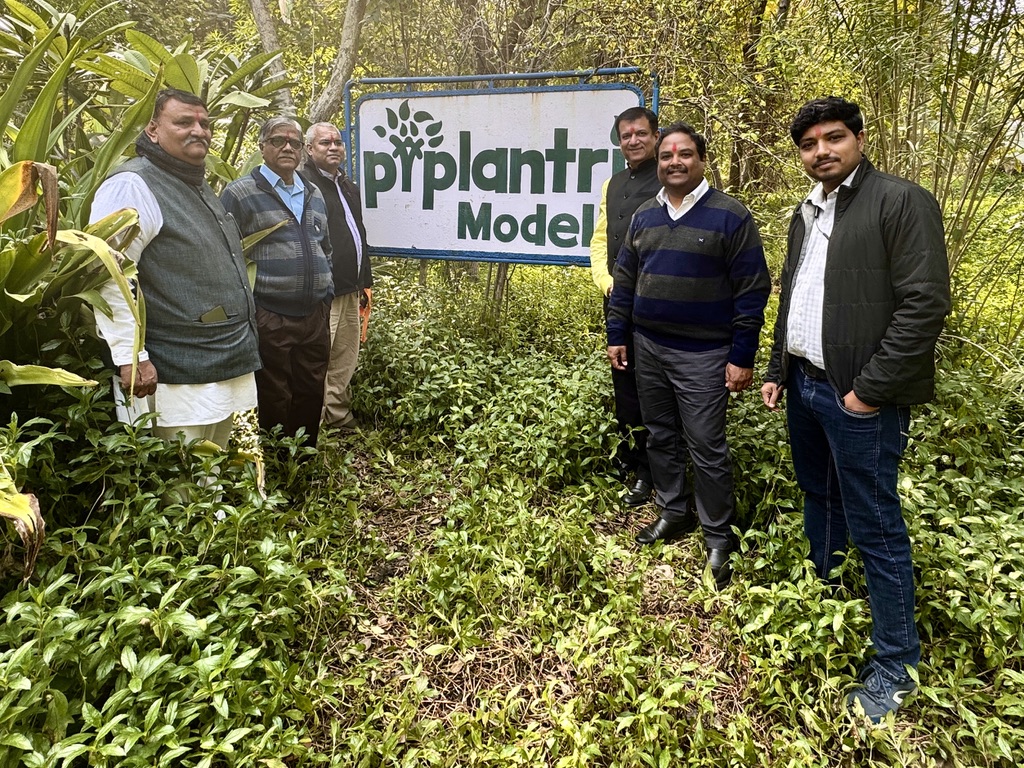
That is what I experienced during my recent visit to Piplantri.
As CEO of Carbon Registry India, I spend much of my time engaging with standards, verification systems, and carbon accounting frameworks. My work usually begins where projects are already structured and seeking formal recognition.
Piplantri was different.
Here, the impact existed long before any discussion of carbon markets.
A Community-Led Beginning
When you speak with the people of Piplantri, you quickly realise this was never designed as an “environmental project.”
There was no feasibility study.
No funding proposal.
No carbon calculations.
It began with something far simpler — and far more powerful — emotion.
Years ago, Shyam Sunder Paliwal decided that every time a girl child was born in the village, the community would celebrate her arrival by planting 111 trees.
Not as symbolism alone.
But as a living, growing promise.
A promise that the child and the land would thrive together.
Over time, this small ritual quietly transformed the landscape.
What was once dry and vulnerable land began turning green.
Saplings became groves.
Groves became micro-forests.
Season after season, the soil held more moisture, the air felt cooler, and birds returned.
And something equally important changed within the community.
The birth of a daughter became an occasion of pride.
Families gathered to plant trees together.
Children grew up knowing that a part of the forest carried their name.
Women found new livelihood opportunities through aloe cultivation and local enterprises that grew around these plantations.
It wasn’t just afforestation.
It wasn’t just social reform.
It wasn’t just rural development.
It was all of it — happening naturally, without labels.
Standing there, you don’t see a “model” or a “case study.”
You see ownership.
You see care.
You see what sustainability looks like when it is woven into culture rather than imposed by policy.
And that is what makes Piplantri so powerful.
Because when a community plants trees not for incentives or compliance — but for their children — the impact is not temporary.
It lasts for generations.
Seeing Impact Before Carbon
During my visit, I walked through stretches of greenery that once struggled with arid conditions. I saw saplings being tended like family assets. I heard stories of how the trees planted years ago are now supporting incomes and restoring local ecology.
It was a reminder of something we often forget in the carbon ecosystem:
Real climate action frequently predates formal carbon frameworks.
Communities across India are already:
- planting trees
- restoring commons
- protecting water bodies
- improving soil health
But because these efforts are not documented through MRV systems (Monitoring, Reporting, and Verification), their climate contribution remains invisible to formal markets.
This creates a gap:
Impact exists — but recognition does not.
That gap is precisely where institutions like registries play a role.
The Role of a Registry — Enabling Recognition, Not Development
Alongside Pradeep Motwani, CEO of Terrablu, we had the opportunity to engage with the village leadership in an open discussion about how carbon systems work — what verification requires, how transparency is ensured, and how communities can participate if they choose to.
It is important to clarify something fundamental.
As a registry, our role is not to design or develop projects.
We do not consult, structure, or advise on implementation.
Our responsibility is governance:
- Setting standards
- Ensuring credibility
- Enabling traceability
- Recording verified climate outcomes
In other words, to provide a trusted platform where genuine climate action can be formally acknowledged.
For communities like Piplantri, that recognition can unlock visibility and long-term sustainability — without altering the authenticity of their work.
Why Piplantri Matters Beyond One Village
What makes Piplantri powerful is not just what it has achieved locally.
It is what it demonstrates is possible at scale.
Imagine:
- 1,000 villages adopting similar tree-based restoration
- each planting tens of thousands of trees
- each protecting local water systems
- each generating livelihood opportunities
The cumulative climate benefit would be enormous — potentially millions of tonnes of carbon sequestration over time.
But even more importantly, the social co-benefits would multiply:
- stronger rural incomes
- better gender outcomes
- reduced migration pressures
- resilient ecosystems
This is the kind of climate action that doesn’t depend solely on subsidies or short-term incentives.
It is self-reinforcing.
And that makes it durable.
A Signal to Communities
For other villages, farmer groups, and local institutions, Piplantri offers a simple message:
You don’t have to wait for a carbon project to start acting.
Start restoring.
Start planting.
Start conserving.
Structure and recognition can follow later.
Carbon finance should reward existing good work — not dictate it.
When impact is genuine, frameworks can be built around it.
Not the other way around.
A Signal to Corporates and Investors
At the same time, there is an equally important signal for corporates and climate financiers.
Too often, capital flows only to large, centrally designed projects.
Yet some of the most meaningful and resilient climate outcomes are happening quietly at the grassroots.
Models like Piplantri represent:
- high integrity
- strong community ownership
- low reversal risk
- visible co-benefits
- long-term permanence
From a financing perspective, these are precisely the characteristics that de-risk climate investment.
Supporting such initiatives — whether through carbon procurement, CSR partnerships, or blended finance — is not just philanthropy.
It is strategic climate capital allocation.
Because when communities own the outcome, the outcome lasts.
A Personal Reflection
For me personally, the visit was grounding.
In our world of methodologies, registries, and compliance requirements, it’s easy to become overly technical.
But standing in Piplantri, the fundamentals became clear again.
Climate action is not first about credits.
It is about people.
Credits, registries, and markets are simply tools to recognize and scale that action.
The trees were already there.
The change had already happened.
All we can do as institutions is ensure such efforts receive the credibility and visibility they deserve.
Closing Thought
If India’s climate transition is to be meaningful, it will not come only from megaprojects and policy announcements.
It will also come from villages like Piplantri.
Places where sustainability is lived daily, not reported quarterly.
Places where planting a tree is not a target — but a tradition.
And perhaps that is the most hopeful climate story of all.
Because when restoration becomes culture, the future becomes greener by default.
Related reading
- Meghalaya: when a forest department becomes a carbon project developer
- What are nature-based solutions (NBS)?
- REDD+ as a carbon project: pros and cons
- Tree transplantation for urban development
- India’s carbon market: a working reference — the structural overview these pieces sit inside
Get this in your inbox
I maintain a working reference on India’s carbon market — which CCTS sectors are notified, which are actually operable, how many methodologies and accredited verifiers exist, and where CBAM stands. Subscribe and I will tell you when those facts change. No fixed schedule, and nothing sent for the sake of sending it.