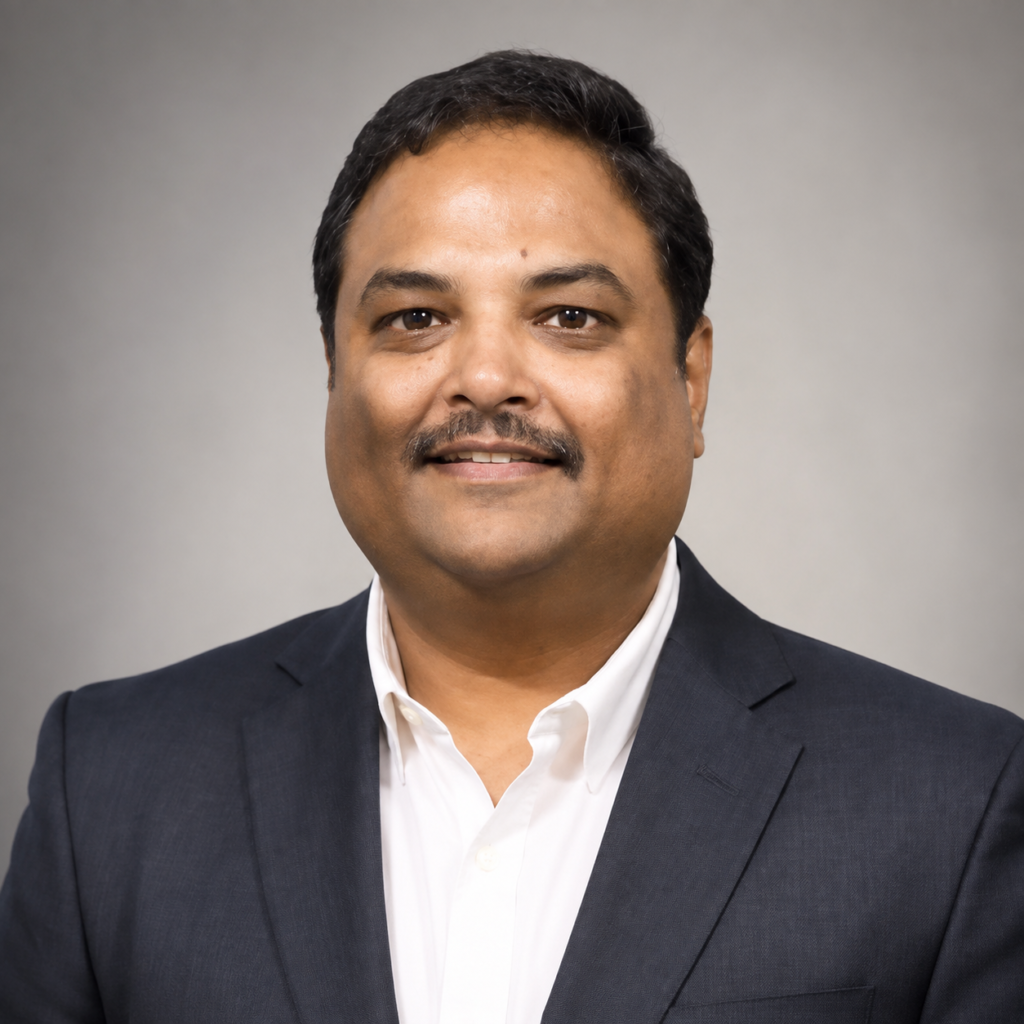
I work on carbon markets in India — the standards, the measurement, the registry infrastructure and the policy that sits behind them. I am currently Chief Executive Officer of Carbon Registry India, and I advise several organisations working in climate and ESG technology.
Everyone works in silos. The opportunities are vast and the knowledge required is scattered. I am just helping to package things together.
That sentence is the closest thing I have to a job description. The carbon market is not one market. It is project developers, verifiers, funding agencies, traders, NGOs, ministries, standards bodies and technology providers, spread across ten approved sectors and sixteen sub-sectors. Each part is competent. The connective tissue is missing. Most weeks someone describes work to me that could be a carbon project and they have no idea, because the information needed to answer that question sits in six different documents.
This site is where I put the packaging.
What I work on
- Carbon Credit Trading Scheme (CCTS) — compliance and offset mechanisms, sectoral targets, eligibility
- CBAM and carbon border measures — embedded emissions, Article 9 recognition, exporter readiness
- Article 6 of the Paris Agreement — authorised activities, corresponding adjustments
- MRV and digital MRV — measurement architecture, verification capacity, data integrity
- Carbon project development — eligibility, methodologies, validation and verification, documentation
- Registry infrastructure — issuance, serialisation, provenance, double-counting controls
- ESG and BRSR — disclosure, assurance, and the tooling underneath
How I got here
My professional life started in technology. For more than two decades I worked across IT, digital transformation, enterprise systems and business operations, including leadership roles in large organisations. My interests moved towards sustainability and climate along the way, and today most of my work sits there.
I did not arrive in climate through the traditional route, and I think that shows in how I look at it. I tend to see these as systems problems. A methodology can be technically perfect, but if the data cannot be collected it cannot be implemented. A sustainability strategy can look excellent on paper, but if nobody knows what to do differently on Monday morning it is not a strategy. A climate project can have a compelling story, but its impact still has to be measured and evidenced. Technology is useful to me only when it solves an actual problem.
That is why I keep ending up at the infrastructure layer — the standards, data, measurement, markets and people that decide whether any of this works.
One idea has stayed with me throughout: resilience first, carbon next. For communities on the front line, adaptation is not a secondary concern. Carbon finance that ignores that tends not to survive contact with reality.
Roles and affiliations
- Chief Executive Officer, Carbon Registry India — a non-profit carbon standard
- Climate advisor, Next Now Green
- Co-founder, CLIMIQ (ESG technology)
- Independent consultant on carbon markets, MRV and climate technology
Disclosure
I hold positions in this ecosystem, and you should read what I write with that in mind. Carbon Registry India is one participant in a market far too large for any single organisation — it needs collaboration and participation from every direction, and I write for the ecosystem rather than for one part of it. Where I have a commercial interest in a subject, I say so in the piece. Where I am uncertain, I say that too. Figures are dated so you can check whether they have moved.
Selected writing
- Can your project become a carbon project in India? A practical test
- CBAM: India’s problem is a data problem before it is a carbon problem
- Some projects deserve to enter the carbon market
- Opportunities for India’s agriculture sector under Article 6
- Why NBS projects need dMRV, not legacy assessment
- What qualifies as a carbon project?
Get in touch
If you are working on measurement systems, verification capacity, carbon project eligibility, the CCTS–CBAM crosswalk or MRV data, I would like to hear from you. Reach me on LinkedIn or through the contact form. If there is a topic you would like covered, say so — a good deal of what I write starts as someone else’s question.