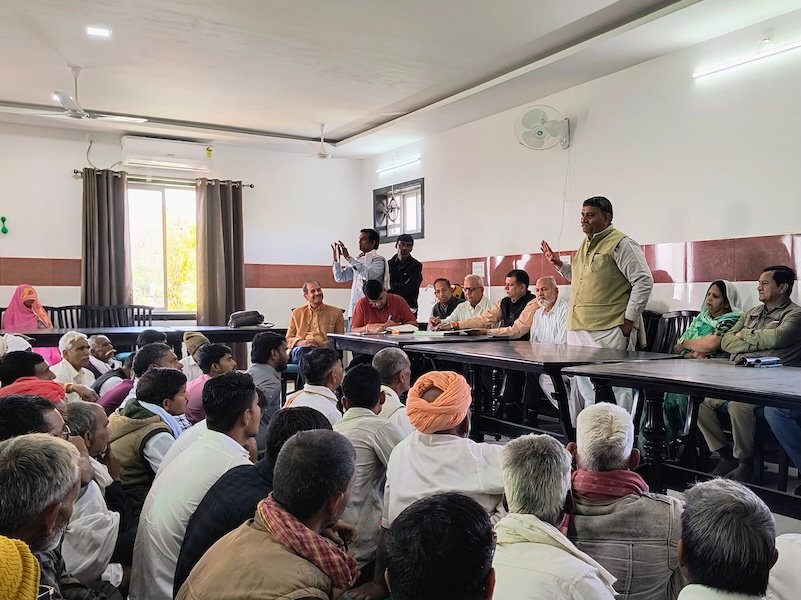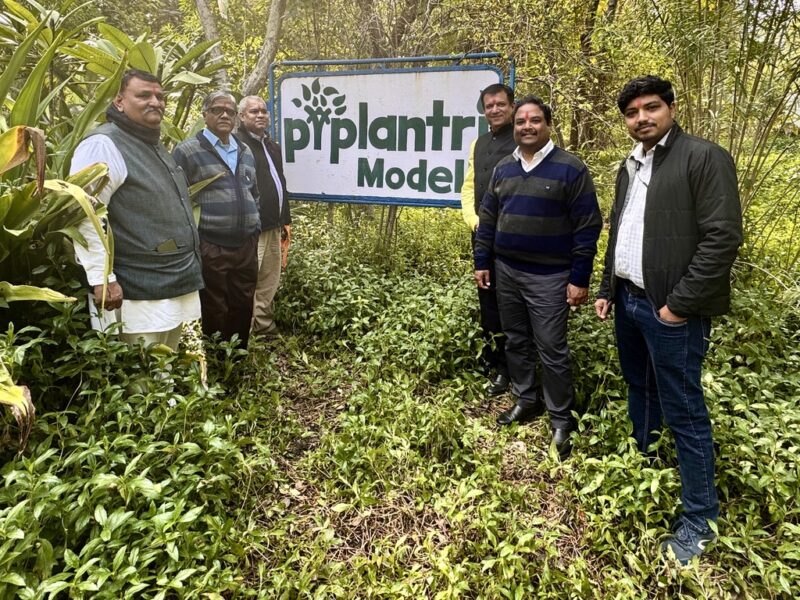
Earlier this year I was in Gandhinagar for the GRIHA Regional Conclave, where Carbon Registry India formalised a collaboration with the GRIHA Council. The occasion was a memorandum. The reason it interested me was narrower and, I think, more useful.
India’s built environment is about to become a carbon accounting problem, and almost nobody in the sector is treating it as one yet.
The retrofit trap
Here is the pattern I have watched play out in other sectors, and it is remarkably consistent.
A building gets designed. It gets built. It gets occupied. Some years later, somebody needs an emissions number for it — because of a disclosure requirement, a lender, a client, a parent company’s Scope 3 exercise. At that point the team goes looking for data that was never collected, about decisions nobody documented, made by people who have moved on.
What follows is expensive estimation dressed up as measurement. And because it is estimation, it is fragile — it cannot survive scrutiny, it cannot be audited properly, and it certainly cannot support a credit.
This is not a building-sector problem. It is the same failure I see everywhere: a methodology that is technically sound but requires data nobody set up a system to collect.
Why the sequence matters now
With the Carbon Credit Trading Scheme(CCTS) now in force, construction sits among the ten approved sectors under the offset mechanism. Limestone Calcined Clay Cement is named as an illustrative technology.
Being named as an approved sector is not the same as being able to build a project. There is currently no approved methodology for construction, and no accredited verifier holding construction scope. That will change. But the buildings being designed today will still be standing when it does — and whether they can participate will depend on decisions being taken now, on drawings, about what gets recorded.
Embedding emissions accounting into a building at design stage costs very little. Reconstructing it a decade later costs a great deal and produces a worse answer.
What this actually looks like in practice
Not a sustainability report. A data architecture.
- Material quantities captured as procurement data, not reconstructed from bills years later
- Supplier emissions intensity recorded at the point of purchase, when the supplier still has an incentive to provide it
- Design decisions and their alternatives documented, because baselines are counterfactual arguments and counterfactuals need contemporaneous evidence
- Operational metering specified at design stage rather than added afterwards
- Provenance preserved — who recorded what, when, and against which version of which standard
None of that is exotic. It is ordinary systems discipline, applied early. It is also the difference between a building that can credibly demonstrate its carbon performance and one that can only assert it.
Green building rating and carbon accounting have grown up as separate disciplines with separate vocabularies, separate consultants and separate documents. They are converging whether the sector plans for it or not. Rating systems already collect a great deal of what carbon accounting needs — the gap is structure and provenance, not effort.
That convergence is the interesting part of the GRIHA collaboration, and the reason it is worth writing about rather than simply announcing.
Resilience first. Carbon next.
Click to view Linkedin Post
Photo above – Left to Right : Richard N. Bright, Shri. Pravin Gordhanji Mali, Hon’ble Minister of State, Forests and Environment, Climate Change, Transport, Government of Gujarat, Sri. Sanjay Seth, CEO GRIHA Council, Ms Shabnam Bassi, Deputy CEO & Secretary, GRIHA Council
Richard N. Bright is CEO of Carbon Registry India, which has a memorandum of understanding with the GRIHA Council referenced above. This post sets out a personal view on sequencing in built-environment carbon accounting; it is not an assessment of any rating system, standard or registry.
Get this in your inbox
I maintain a working reference on India’s carbon market — which CCTS sectors are notified, which are actually operable, how many methodologies and accredited verifiers exist, and where CBAM stands. Subscribe and I will tell you when those facts change. No fixed schedule, and nothing sent for the sake of sending it.